
Synopsis
Age-related swallowing difficulties, or advanced dysphagia, carry a severe clinical risk of silent aspiration, choking, and rapid physical wasting, a complex threat managed perfectly within an old age home for 24×7 healthcare in India. Within a senior care facility with round the clock healthcare in India, expert speech-language therapists and clinical dietitians craft specialized, texture-modified meal plans that ensure safe swallowing while maximizing nutrient density. Residents dine in a secure, supportive setting where they are constantly surrounded by people who closely monitor every bite, manage eating pace, and ensure optimal, upright posture during and after meals. Having specialized round the clock healthcare for seniors in India ensures that hydration, caloric intake, and electrolyte balances are tracked systematically to prevent the dangerous muscle wasting associated with nutritional decline. In the event of an unexpected choking episode or acute breathing difficulty, the floor nursing teams are trained to provide a faster emergency response. Relying on a residential facility for elders with 24×7 healthcare support transforms stressful dietary restrictions from an agonizing household worry into an organized, life-saving clinical routine. This blog examines why professional geriatric oversight is essential for managing swallowing disorders.
Table of Content
- The Silent Threat of Advanced Dysphagia in Aging Adults
- Why an Old Age Home for 24×7 Healthcare in India is Crucial for Swallowing Safety
- The Science of Texture-Modified Nutrition in Geriatric Care
- Safeguarding the Dining Hour: How Being Surrounded by People Prevents Choking
- Shielding Vulnerable Lungs with a Faster Emergency Response
- Combating Nutritional Decline with Specialized Round the Clock Healthcare for Seniors in India
- Artha Senior Care: The Standard of Specialized Geriatric Nutritional Care
- Comprehensive Clinical Support and Dietary Services at Artha
The Silent Threat of Advanced Dysphagia in Aging Adults
Dysphagia—the medical term for difficulty swallowing—is a serious and frequently underdiagnosed condition in geriatric medicine, often arising from neurological disorders like strokes, Parkinson’s disease, advanced dementia, or simply the natural weakening of aging throat muscles (sarcopenia of the swallowing musculature). When an elder suffers from advanced dysphagia, the coordinated mechanics of moving food from the mouth to the stomach break down. The most dangerous consequence is “silent aspiration,” where food or liquids enter the airway and slip into the lungs without triggering a cough reflex. Over time, this introduces bacteria into the respiratory tract, leading to aspiration pneumonia, a leading cause of hospitalization and mortality in older adults. An old age home for 24×7 healthcare in India transforms this high-risk condition into a carefully managed daily routine, implementing structural safeguards that ensure eating remains safe and dignifying.
Why an Old Age Home for 24x7 Healthcare in India is Crucial for Swallowing Safety
The effective clinical management of advanced dysphagia requires a deep understanding of food rheology—the consistency, thickness, and texture of what a senior consumes. Within a senior care facility with round the clock healthcare in India, clinical dietitians design highly customized menus utilizing international standards like the International Dysphagia Diet Standardisation Initiative (IDDSI) framework. Liquids are carefully altered using medical-grade thickeners to precise consistencies (such as nectar-thick or honey-thick), which slows down the flow of fluid and gives weakened throat muscles more time to close the airway. Solid foods are modified into pureed, minced, or moist categories that require minimal chewing and slide down the esophagus smoothly. This meticulous approach removes the immense stress and guesswork from home care, where family members often struggle to prepare safe meals, inadvertently increasing the risk of malnutrition or choking.
The Science of Texture-Modified Nutrition in Geriatric Care
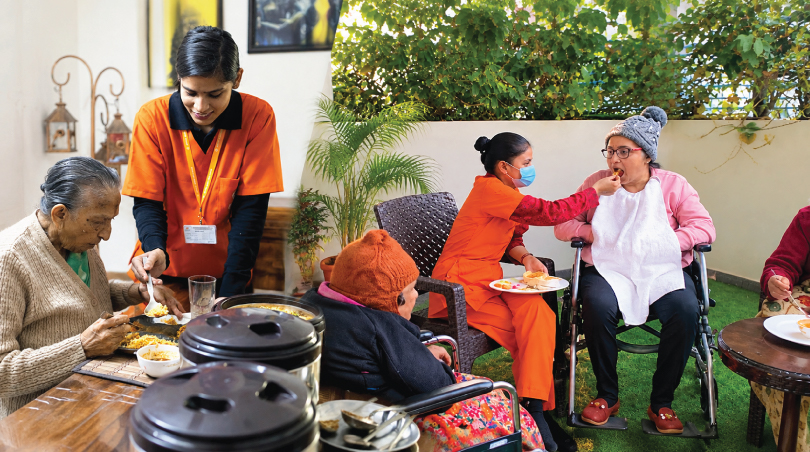
Physical posture during and immediately after meals is another critical component of dysphagia therapy that requires constant human supervision. In a residential facility for elders with 24×7 healthcare support, trained caregivers ensure that residents sit at a perfect 90-degree angle during dining and remain upright for at least 30 to 45 minutes post-meal to allow gravity to assist with digestion and prevent acid reflux or late aspiration. Caregivers are trained in specific feeding techniques, such as the “chin-tuck maneuver,” which physically narrows the airway entrance and widens the esophagus, significantly decreasing the chance of food entering the lungs. This continuous, one-on-one assistance ensures that mealtime is unhurried, respectful, and safe, allowing the senior to receive adequate nourishment without experiencing exhaustion or panic.
Safeguarding the Dining Hour: How Being Surrounded by People Prevents Choking
The psychological impact of dysphagia often leads to a deep-seated fear of eating, causing seniors to reject food and slide into rapid nutritional decline, dehydration, and muscle wasting. Being constantly surrounded by people who offer emotional encouragement, patience, and social interaction is essential for breaking this cycle of anxiety. In a professional retirement community, being surrounded by people ensures that residents do not eat in isolated rooms where a choking event could go unnoticed. Instead, they dine in warm, communal settings where their pace is monitored and conversational interactions are kept gentle to avoid distraction while swallowing. This social fabric turns a stressful medical necessity back into an enjoyable lifestyle experience, helping to stimulate appetite and combat the depression that often accompanies physical frailty.
Shielding Vulnerable Lungs with a Faster Emergency Response
In an acute dysphagia crisis, such as a severe choking episode or sudden respiratory distress from an obstructed airway, every second is vital to survival. The facility’s infrastructure guarantees a faster emergency response to handle these sudden, terrifying events. Floor nursing stations are operational 24/7, and staff are extensively trained in geriatric first aid, including the Heimlich maneuver, abdominal thrusts, and emergency suctioning protocols. They are equipped with bedside medical suction units to instantly clear a resident’s airway and can administer emergency oxygen therapy within seconds of a distress signal. This immediate rapid response window provides a life-saving safety net that home care environments simply cannot replicate, ensuring that an accidental swallow does not turn into a medical tragedy.
Combating Nutritional Decline with Specialized Round the Clock Healthcare for Seniors in India
Choosing specialized round the clock healthcare for seniors in India represents a definitive solution for future-proofing an elder’s health against systemic nutritional failure. The facility manages the entire spectrum of metabolic care—from regular laboratory tracking of serum albumin and electrolyte levels to coordinating regular assessments with speech-language pathologists. This comprehensive clinical management ensures that if a senior’s swallowing capability declines further, advanced nutritional interventions, such as tube feeding management (PEG or NG tubes), can be handled with absolute sterile precision and clinical expertise. By embedding top-tier medical safety into a premium hospitality environment, the facility ensures that seniors can age with maximum dignity, security, and absolute peace of mind.
Artha Senior Care: The Standard of Specialized Geriatric Nutritional Care
Artha Senior Care is the leading choice for families seeking an old age home for 24×7 healthcare in India that specializes in advanced dysphagia management, geriatric nutrition, and luxury senior living. Our brand is recognized for its uncompromising medical standards and sophisticated community culture, providing a secure sanctuary where metabolic and respiratory health are protected with 100% precision. The USPs of Artha include a guaranteed 20-second emergency response time, an expert in-house dietary team, and a 24/7 skilled nursing staff trained in advanced airway management and feeding techniques. We understand that advanced dysphagia requires vigilant, daily monitoring, and our Gurgaon facility is uniquely engineered to provide an elegant, zero-barrier space where residents can dine safely, backed by world-class geriatric experts.
Comprehensive Clinical Support and Dietary Services at Artha
Our services at Artha are designed to deliver an integrated, 360-degree solution for dysphagia and nutritional decline, ranging from tailored meal modification to proactive muscle-strengthening speech therapies. We offer 24/7 skilled nursing care, routine weight tracking, and continuous monitoring of hydration levels to ensure long-term physical stability. Our private luxury suites combine sophisticated medical safety architecture, including fully adjustable electronic beds that promote ideal feeding posture, with premium aesthetic comfort. We also prioritize the social and emotional health of our residents, providing a diverse calendar of engaging events and gentle sensory stimulation to keep our community active, connected, and emotionally fulfilled. At Artha, we provide a nurturing sanctuary where complex geriatric conditions are met with advanced science and deep human empathy, empowering our seniors to live their golden years with maximum safety and absolute grace.
FAQ's
Why is an old age home for 24x7 healthcare in India necessary for advanced dysphagia?
An old age home for 24×7 healthcare in India is necessary because advanced dysphagia presents a continuous risk of silent aspiration, severe choking, and aspiration pneumonia, which require immediate professional monitoring. A private home environment cannot provide the constant presence of nurses trained to detect silent respiratory distress or the specialized culinary knowledge required to alter food textures safely. Within a specialized facility, speech therapists and dietitians collaborate to ensure every meal is texture-modified, and skilled nursing teams supervise every dining hour, providing a level of physical safety that home care cannot match.
How does a senior care facility with round the clock healthcare in India prevent aspiration pneumonia?
A senior care facility with round the clock healthcare in India prevents aspiration pneumonia through strict adherence to texture-modified diets and therapeutic positioning protocols. Liquids are thickened with medical-grade agents to control their flow, and solid foods are pureed or minced to eliminate chewing strain. Trained caregivers ensure that residents maintain an upright, 90-degree posture during meals and remain elevated for at least 30 minutes afterward to prevent reflux. This continuous supervision ensures that food and fluids enter the esophagus rather than slipping into the respiratory tract, directly protecting lung health.
What constitutes a faster emergency response during a choking episode?
A faster emergency response during a choking episode means that trained medical professionals reach the senior within seconds to perform immediate airway clearing maneuvers. In a professional care environment, suites and dining areas are equipped with 24/7 wireless emergency alerts monitored by on-site nursing teams. Floor staff are certified in advanced geriatric life support and can instantly perform abdominal thrusts, utilize medical suction devices at the bedside to clear mechanical obstructions, and administer supplemental oxygen, offering an immediate life-saving safety net that prevents hypoxia and respiratory arrest.
How does being surrounded by people help a senior who is afraid to eat due to dysphagia?
Being surrounded by people who offer patience, emotional warmth, and slow guidance helps reduce the intense anxiety and fear of choking that causes many dysphagic seniors to refuse food. Isolation can worsen mealtime depression, leading to severe nutritional decline. In a professional community, being surrounded by people turns a clinical necessity back into a comforting social experience. Group dining settings allow caregivers to monitor eating habits discreetly, while the presence of active peers provides encouragement, stimulating the senior’s appetite and helping them maintain a healthy nutritional intake.
Does a residential facility for elders with 24x7 healthcare support manage tube feeding?
Yes, a residential facility for elders with 24×7 healthcare support provides expert, sterile management for advanced nutritional interventions, including Percutaneous Endoscopic Gastrostomy (PEG) tubes and Nasogastric (NG) tubes. Skilled nurses manage the administration of specialized enteral nutrition, monitor for skin breakdown or infection around the tube site, and ensure proper flushing protocols are followed to prevent blockages. This professional clinical oversight eliminates the heavy burden and medical risks associated with managing
