
Synopsis
Parkinson’s disease demands a highly specialized, responsive environment to manage its complex progression of motor symptoms, tremors, and sudden freezing episodes. Choosing an old age home for 24×7 healthcare in India ensures that a senior living with this neurological condition resides in a completely fall-proofed and optimized ecosystem. Within a senior care facility with round the clock healthcare in India, dedicated geriatric physiotherapists work on gait training, balance adaptation, and physical resilience on a daily basis. Residents thrive mentally and emotionally because they are constantly surrounded by people who offer social normalization, companion care, and constant encouragement. Precise medication timing is absolutely critical for managing dopamine levels and minimizing “off-time” symptoms, a logistical task handled with total precision through specialized round the clock healthcare for seniors in India. In the event of an accidental fall or a sudden physical freezing spell, the facility infrastructure guarantees a faster emergency response through on-site clinical teams. Moving to a residential facility for elders with 24×7 healthcare support ensures the senior maintains maximum dignity and functional capability. This blog explores why professional geriatric care is essential for effective Parkinson’s management.
Table of Content
- The Progressive Impact of Parkinsons Disease on Geriatric Mobility
- Why an Old Age Home for 24×7 Healthcare in India Offers True Safety
- Targeted Neurological Rehabilitation in a Senior Care Facility with Round the Clock Healthcare in India
- The Critical Logistics of Dopamine Medication and Clinical Precision
- How a Faster Emergency Response Mitigates the Real Risks of Parkinsonian Falls
- The Therapeutic Power of Being Surrounded by People in an Active Community
- Artha Senior Care: Setting the Benchmark for Specialized Parkinsonian Care
- Comprehensive Services and Motor Function Support at Artha
The Progressive Impact of Parkinsons Disease on Geriatric Mobility
Parkinson’s disease is a progressive neurological disorder that impacts the central nervous system, slowly eroding a senior’s control over their motor functions and physical coordination. In the early stages, subtle tremors might be manageable at home, but as the condition advances, symptoms like muscle rigidity, bradykinesia (slowness of movement), and postural instability create profound challenges. For a senior living in a traditional urban home, standard environments quickly become a minefield of hidden hazards. An old age home for 24×7 healthcare in India directly addresses these challenges by transforming the physical environment into a therapeutic resource. By substituting traditional residential friction with an expertly engineered, single-level infrastructure, the facility provides a space where the senior can move with significantly less stress and anxiety, directly slowing the functional decline associated with the disease.
Why an Old Age Home for 24x7 Healthcare in India Offers True Safety
The clinical management of Parkinson’s requires a deep understanding of the “on-off” phenomenon, where the effectiveness of medication fluctuates throughout the day, causing sudden transitions from mobility to complete rigidity. Within a senior care facility with round the clock healthcare in India, the clinical staff are trained to observe and document these motor fluctuations with absolute precision. This continuous tracking allows visiting neurologists to fine-tune pharmaceutical interventions, matching the medication dosages perfectly to the resident’s unique biological patterns. This level of professional oversight eliminates the common home-care error of missed or delayed pill administration, which can trigger severe rigidity and distressing panic attacks. By maintaining stable chemical levels in the brain, the facility ensures that the resident enjoys a more predictable, functional, and comfortable daily routine.
Targeted Neurological Rehabilitation in a Senior Care Facility with Round the Clock Healthcare in India
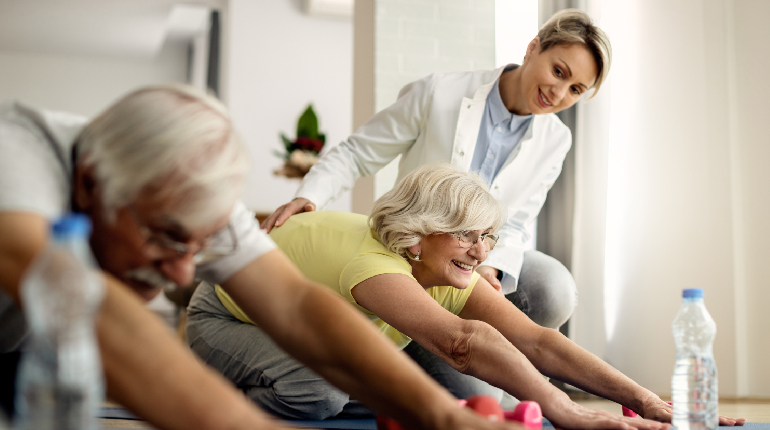
Physical rehabilitation for Parkinson’s is fundamentally different from standard geriatric fitness, requiring targeted routines that focus on sensory cueing and balance reinforcement. In a residential facility for elders with 24×7 healthcare support, neuro-physiotherapists utilize specialized techniques, such as rhythmic auditory cueing and visual stepping markers, to help residents overcome “freezing” spells. These daily, supervised exercises help the brain forge new pathways around damaged areas, preserving the senior’s gait and muscle strength for a much longer period. This intensive therapeutic intervention is delivered within an upscale, fully equipped physiotherapy room, ensuring that rehabilitation feels like an empowering wellness routine rather than an exhausting medical chore. By keeping the muscles engaged and the joints flexible, the facility helps the senior maintain their physical independence and self-reliance.
The Critical Logistics of Dopamine Medication and Clinical Precision
The psychological burden of Parkinson’s often manifests as social withdrawal and depression, driven by the elder’s embarrassment over tremors or speech difficulties. Being constantly surrounded by people who offer non-judgmental empathy and friendship is an essential clinical component of the recovery strategy. In a professional retirement community, being surrounded by people ensures that the senior remains actively integrated into a warm social fabric. Group activities, speech therapy workshops, and shared dining experiences encourage the resident to voice their thoughts and practice communication skills, preventing the vocal decline common in advanced stages. This constant emotional reassurance helps break the isolating cycle of chronic illness, boosting the senior’s mental resilience and baseline happiness, which directly correlates with improved physical health outcomes.
How a Faster Emergency Response Mitigates the Real Risks of Parkinsonian Falls
The risk of a severe, injury-producing fall is an ever-present concern for advanced Parkinson’s patients due to their compromised postural reflexes. Traditional home care environments often suffer from delayed emergency intervention if a fall occurs during the night or when a single caregiver is overwhelmed. In a senior care facility with round the clock healthcare in India, a faster emergency response is guaranteed by an alert, fully awake night-nursing staff and advanced motion-detection systems. If an incident occurs, the response time is measured in seconds, ensuring that the senior is immediately assessed for injury and stabilized using professional equipment. This rapid intervention window prevents the secondary complications of a fall, such as internal injuries or muscle damage from prolonged immobility, offering families a robust safety net that shields their loved ones 24 hours a day.
The Therapeutic Power of Being Surrounded by People in an Active Community
Transitioning to specialized round the clock healthcare for seniors in India represents a compassionate, strategic choice to preserve an elder’s lifestyle dignity through all stages of neurological decline. The facility manages all the complex, exhausting logistics of chronic disease management—from pharmacy procurement and medication reconciliation to nutritional planning and coordination with specialists. This comprehensive support structure ensures that the resident can dedicate their energy to living fully, socializing with peers, and exploring creative hobbies. By embedding advanced clinical safety into a luxury hospitality environment, the facility transforms aging from a fearful struggle into a managed, secure, and respectful journey. Professional geriatric care provides the only true environment where a Parkinson’s patient can live with absolute peace of mind.
Artha Senior Care: Setting the Benchmark for Specialized Parkinsonian Care
Artha Senior Care is the leading choice for families seeking an old age home for 24×7 healthcare in India that specializes in advanced Parkinson’s management and dignified luxury living. Our brand is defined by its uncompromising medical standards and sophisticated community culture, providing a sanctuary where neurological health is protected with 100% precision. The USPs of Artha include a guaranteed 20-second emergency response time, in-house neuro-physiotherapy, and 24/7 nursing stations on every floor to manage delicate medication intervals. We understand that managing Parkinson’s is a dynamic, 24-hour responsibility, and our Gurgaon facility is uniquely engineered to provide an elegant, zero-barrier space where residents can live safely, honors their personal history, and experience deep comfort.
Comprehensive Services and Motor Function Support at Artha
Our services at Artha are designed to provide an integrated, holistic solution for Parkinson’s care, ranging from intensive physical therapy to customized nutrition that avoids medication interference. We offer 24/7 skilled nursing care, continuous vital monitoring, and regular consultations with visiting neurologists to ensure optimal symptom control. Our residential suites combine elite aesthetic comfort with subtle medical safety features, including fall-preventive flooring and illuminated pathways. We place an equal emphasis on social vitality, offering a diverse calendar of cultural events and cognitive engagement activities to keep our community active and connected. At Artha, we provide a nurturing sanctuary where the progression of neurological illness is met with cutting-edge science and deep human compassion, empowering our seniors to live their golden years with passion and grace.
FAQ's
Why is an old age home for 24x7 healthcare in India essential for advanced Parkinson's?
An old age home for 24×7 healthcare in India is essential because advanced Parkinson’s disease causes severe motor instability, fluctuations in mobility, and sudden freezing spells that require immediate, professional intervention. A private home environment cannot provide the zero-barrier infrastructure or the constant, awake presence of skilled nurses trained in neurological care. Within a specialized facility, medication timing is managed with digital precision to minimize “off-time” symptoms, and regular health checks prevent common complications like aspiration or infections. This professional clinical ecosystem ensures that the resident remains safe, stable, and functionally active, offering a level of security that cannot be replicated by untrained home caregivers.
How does a senior care facility with round the clock healthcare in India prevent Parkinsonian falls?
A senior care facility with round the clock healthcare in India prevents falls through a dual strategy of protective architecture and proactive physical rehabilitation. The physical environment is engineered with non-slip flooring, zero-threshold transitions, and continuous wall-mounted grab bars that provide steady support. Clinically, in-house physiotherapists engage residents in daily balance training and strength routines tailored to counter Parkinsonian stiffness. Furthermore, skilled nursing teams assist with all physical transfers, especially during high-risk nighttime hours, ensuring that the senior never has to navigate disorientation alone. This comprehensive approach minimizes the primary triggers of balance loss, keeping the resident protected at all times.
Why is medication timing so critical in specialized round the clock healthcare for seniors in India?
Medication timing is the single most important factor in managing Parkinson’s because drugs like levodopa rely on maintaining a stable, consistent concentration of dopamine in the brain. Even a 15-minute delay in administration can cause a resident to drop into an “off” state, resulting in severe tremors, muscle rigidity, and immense psychological anxiety. Specialized round the clock healthcare for seniors in India utilizes strict, digitized pharmacy tracking to ensure that every pill is given exactly at the prescribed interval. Nurses are trained to coordinate these doses away from high-protein meals, which can interfere with drug absorption, ensuring the medication works at maximum clinical efficiency.
How does being surrounded by people benefit the mental health of a Parkinson's patient?
Being surrounded by people who understand the disease provides a vital psychological shield against the isolation, anxiety, and depression that frequently accompany a Parkinson’s diagnosis. Elders often withdraw from social life due to embarrassment over physical tremors or slurred speech, which can accelerate cognitive decline. In a professional community, being surrounded by people provides an atmosphere of acceptance and continuous encouragement. Shared activities, group speech exercises, and communal dining provide a natural therapy that keeps the brain active and social skills sharp. This vibrant community life helps the senior maintain a positive identity, which is crucial for overall neurological health.
What constitutes a faster emergency response during a Parkinsonian crisis?
A faster emergency response in a Parkinsonian crisis means that trained medical personnel reach the senior within seconds of an incident, such as an accidental fall or an acute swallowing panic. In a specialized residential facility for elders with 24×7 healthcare support, nurses are stationed on every floor and monitor wireless call pendants and room sensors 24/7. This speed ensures that if a fall occurs, the senior is immediately assessed for fractures or head trauma before being moved, preventing secondary injuries. A faster emergency response also ensures that emergency medications can be administered instantly to manage sudden severe rigidity, keeping the resident safe and comfortable through any acute physiological event.
